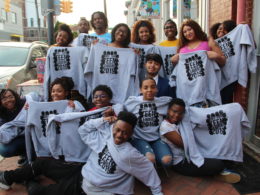
The Northern Virginia Mental Health Foundation fosters hope by providing financial assistance to individuals receiving mental health services, yet facing urgent needs.
We spoke with President Joan Ehrlich and Vice President Emeritus Lyn Tomlinson about their experiences on the foundation’s all-volunteer board, and how they work to bring hope to those they help through financial assistance.
Walk us through how a grant gets to someone in need. What does that process look like from start to finish?
Tomlinson: We serve clients who are served by the Fairfax-Falls Church Community Services Board, which is a safety net for people with mental health conditions. When an individual is interested in a grant, we have a form for staff to fill out with relevant questions. We use a medical record number for confidentiality and to keep track of who has had grants. Then the case manager writes out the need, if the individual has had a grant before, and how the grant will impact their treatment plan. For example, perhaps an individual needs to have dental work. That is going to impact their mental health treatment plan because if their dental work is not taken care of, their health is going to suffer. For instance, their ability to concentrate may weaken and they may have trouble showing up to appointments.
Once that form is submitted, the program committee quickly sees if we have any questions for the case manager and then decides if we are going to accept the grant application. We generally do approve most of the requests that come in as most of the requests are very reasonable and really do support the individual.
How has the Northern Virginia Mental Health Foundation evolved over time?
Tomlinson: In recent years, the requests we are getting are more complex and for more money, and I don’t want to speculate about the reasons why that is, but I have noticed that the individuals that we are serving have very significant mental health conditions.
Ehrlich: Looking back at some of our history, that is one of the reasons the board even came into being. We realized that public services were being hurt by lack of funding or decrease in funding, and so it is not so much a drastic change as an evolution. We all know public services continue to compete for the little funding that they get, so that is why these kinds of boards and services are created.
What is an accomplishment that has stayed with you during your time with the Northern Virginia Mental Health Foundation?
Tomlinson: One story that always sticks with me was when a peer support specialist requested a car repair. We supported her car repair – because of that, not only was she able to go to work herself, but she was also able to support others and take them where they needed to go. She spoke at our 30-year celebration a few years ago. That will always stick with me because not only did we make a difference in her life, but because we made a difference in her life, she then could make a difference in the lives of others, which I just found so powerful.
Mental health and housing instability seem to be deeply connected in the cases you see. Can you speak about this relationship?
Ehrlich: Often, it is sort of a circuitous way that we help someone. For example, say someone experiences a temporary illness that for many of us would just mean a few days of missing work. A lot of these folks do not have that option, and if they must miss work even for a short period, that will really affect them financially. This could lead to housing insecurity. So, if we can introduce that temporary stopgap and provide them with the money to cover their rent until they can go back to work, that can alleviate the chance of that individual becoming unhoused.
What do you wish more people understood about mental health and the communities you serve?
Tomlinson: I think we have come a long way as a society, but I still think there is a lot of stigma surrounding mental health conditions. A friend of mine posted something on Facebook the other day, and I was just so grateful, because she spoke about her own journey with mental health, and I just thought that was wonderful. I would love it if we could be at the same place where I might talk to you about my cholesterol medication as I might talk to you about my antidepressant medication. I would love for us to be there.
Additionally, I also think it is important to highlight how possible recovery is for people and that there is hope. Many of the individuals we serve do not have large financial capacity, and we are the funder of last resort, not because we’re selfish, but because we just want to make sure that all other avenues have been tried.
The other thing I’ve seen over the past three years is that frequently other funders have been tried and aren’t able to apply or aren’t able to say yes. The need is big, and even $5 or $25 can make a big difference for people.
To learn more or find ways to get involved, visit the Northern Virginia Mental Health Foundation website.