
“How many of you have heard this performed live before?”
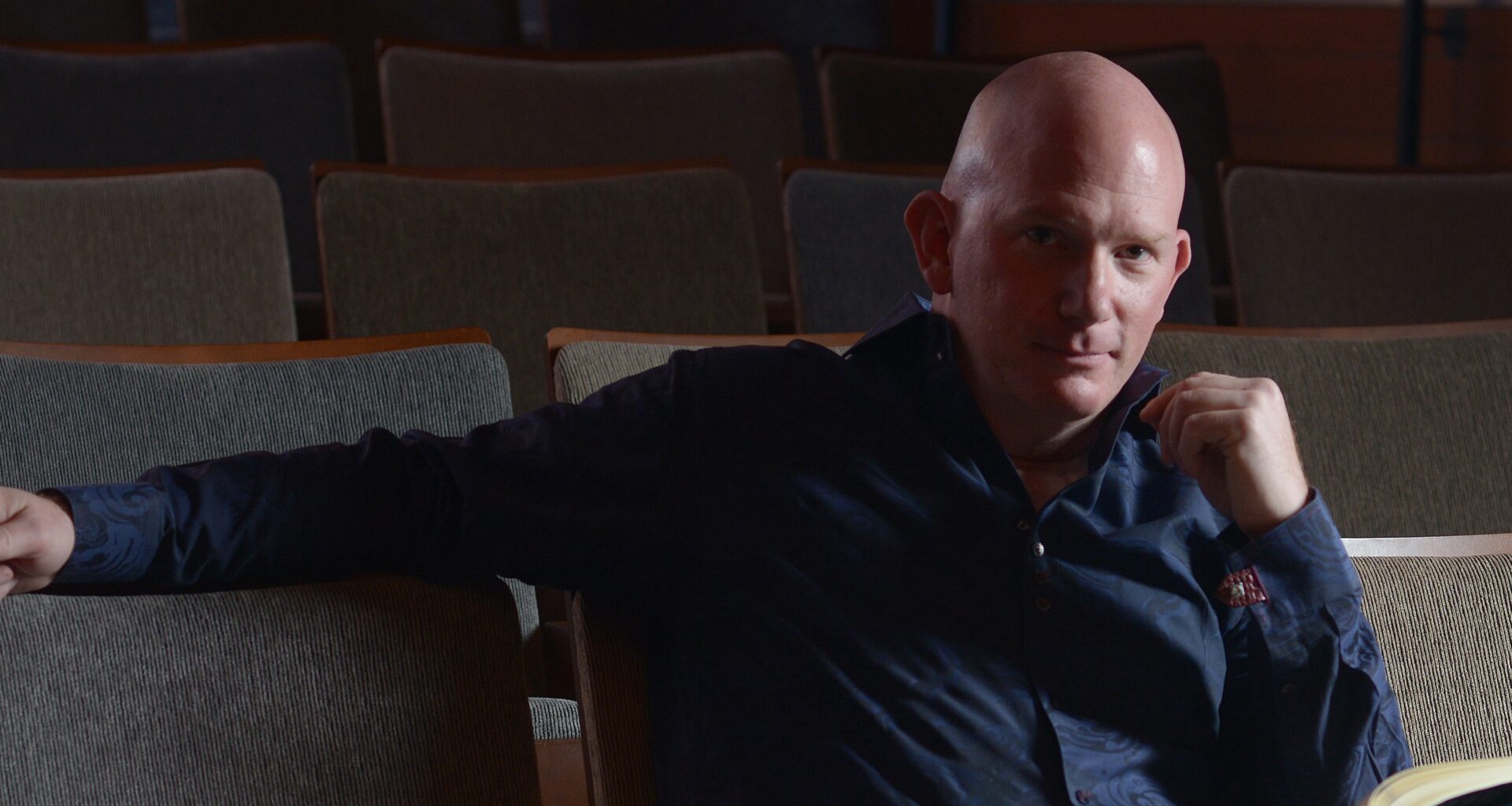
Peter Wilson, a conductor and violinist who spent three decades playing violin in “The President’s Own” U.S. Marine Band, likes to ask this question of audiences who attend Waynesboro Symphony Orchestra performances. For someone living in or around Waynesboro, Va., the answer might only be “yes” if the Waynesboro Symphony has played the piece before. Although some sources, such as Cause IQ, place the number of orchestras in Virginia at around 70, without the WSO, local classical music fans would need to travel to Roanoke, 95 miles southwest, to hear most orchestral masterworks.
When he asks that question before a performance, Wilson said, “invariably, those folks come up to me after the concert, and [say], ‘oh my gosh, I used to love this piece on recording, but I had no idea what I was missing by coming and hearing this [live].’”

Waynesboro’s Famous Fan
In addition to performances in Waynesboro, the group also performs in Staunton and Charlottesville, and has even found a fan in Rita Mae Brown, the New York Times bestselling novelist, who lives in the Charlottesville area. According to Wilson, Brown is one patron who found herself moved by a live performance of a piece that she perhaps hadn’t connected with from recordings.
“If you’re engaged in a concert and compelled to sit there, compelled to not do anything else but to take it all in, it’s going to be a whole different experience,” Wilson said.
Brown is a big enough fan that she included the Waynesboro Symphony and its conductor in one of her novels.
“We’re helping solve the mystery of the murder from the front page,” Wilson added.
Right on Cue
Wilson also serves as the music director for another of those 70 orchestras—The Richmond Philharmonic (RPO). (If the group sounds familiar, it may be because RPO trombonist and then board president Dave Davis was featured in a five questions interview in The Phil in 2021.)
Audiences in Richmond are different from those in Waynesboro and Charlottesville. With more access to classical and symphonic music, from other local orchestras and even touring orchestral programs, audiences at RPO concerts have a relative wealth of choices of live symphonic music. Because there is another symphony in Richmond that sells tickets for $80 to $200, RPO made the decision to make concerts free so they would as accessible as possible to the community.
“It’s not about us not putting [a dollar] value on our event,” Wilson said. “It’s about us saying, ‘We play at a high level, and great orchestral music can be accessible for free.’”
The RPO’s concerts also feature a pre-concert talk with Wilson hosted by Mike Goldberg from VPM’s local classical music programming, which helps audience members dive into the details and meaning behind the pieces on the program and get even more out of the performance. Wilson said they’re considering bringing the pre-concert talk to Waynesboro as well.
Fostering a Sense of Community
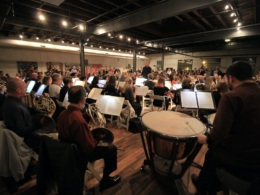
For all their differences as ensembles and in audience make-up, the two groups have something other than their director in common: both are community orchestras, meaning they’re made up of largely amateur musicians—people who played their instruments growing up and may or may not have studied music in college, but who don’t primarily make their livings as performers now. Members of the groups are accountants, doctors, engineers, marketers and teachers.
“What I love about community groups is seeing them go from, ‘Can we do this?’ to ‘We’re doing it!’ It’s like restoring a beat-up Mustang—piece by piece you bring it back to life. That transformation is magic,” Wilson said. “When we did Mahler 1 [with WSO], I was a bit terrified. But by week three [one rehearsal per week], we had it learned. We played every note every week. That’s when I realized: consistency builds muscle memory, and that’s what makes excellence possible in a community orchestra.”
That work clearly paid off—Waynesboro Symphony was awarded The American Prize for “Best Community Orchestra Performance” in 2021 for the recording of that piece.
As to how to bring out that kind of performance from a disparate group of people who only play together once a week, Wilson has his own approach to the work.
“I feel like my job is not just to try to get people to play together but to get people to think together and to breathe together and to interpret my beat in the same way,” Wilson said. “Because you have 70 people interpreting my beat, you can get up to 70 different things from the musicians.”
How to Get Involved
When we asked Wilson how people can get involved with the community orchestras in their area, he started with talking about how to get involved playing with a group.
“If you’re a player, seek out the orchestra in your community and don’t assume that they don’t have openings,” Wilson said. “Ask the question, ‘Can I audition?’ Or ‘can I come in and sit in with your group?’”
This is especially true if you play a string instrument, such as violin, viola, cello, or bass, Wilson emphasized. A community orchestra may have 70 or more total musicians, with 40-50 being string instruments.
“Now, as a community member, the thing I would stress is, if you haven’t been to a live concert in a while or ever, you must do that,” he said. “That has to be on your bucket list to do, because you have no idea what you’re missing, that live [orchestral] music is so incredibly powerful.
“We’re in the business of changing lives. We’re in the business of moving people,” he added. “And we can only do that if people come to the concert, right? And I’m confident that we’ll do that if we can get them in the seats.”
Your next opportunity to catch the Waynesboro Symphony Orchestra live is at its Symphonic Masquerade fundraiser at Charlottesville’s Paramount Theater (tickets range from $10-$90). Its next free masterworks concert is “Romeo & Juliet: A Symphonic Evolution,” Feb. 21 & 22.
You can see the Richmond Philharmonic Orchestra in concert at St. Christopher’s School on Nov. 2, where they will present a free program titled Heroes.