



For many students across Central Virginia, weekends can be the hardest part of the week. Without access to school meals, children who rely on free and reduced breakfast and lunch often face food insecurity once they leave the classroom.
Backpacks of Love is committed to filling that gap by providing students with bags of meals and snacks that carry them from Friday afternoon to Monday morning.
The organization was founded in 2011 by Powhatan community member Bobby Fulcher, whose personal experience growing up with food insecurity shaped his commitment to supporting young people.
Backpacks of Love began as a grassroots effort to address a growing need in local schools. Although the organization has expanded its geographic footprint and volunteer networks over the years, the heart of the mission remains unchanged. According to the counters on its website, Backpacks of Love has delivered three million meals and half-a-million backpacks. That’s more than 1,500 backpacks delivered each week, totaling over 15,000 children served across Powhatan, Chesterfield, Henrico, Hanover, Goochland, Buckingham, Amelia, Cumberland and Hopewell.
As Evan Davis, president of Backpack of Love’s board of directors explained, the goal has always been to feed kids over the weekend by supplementing the meals students normally receive through the free and reduced lunch program.
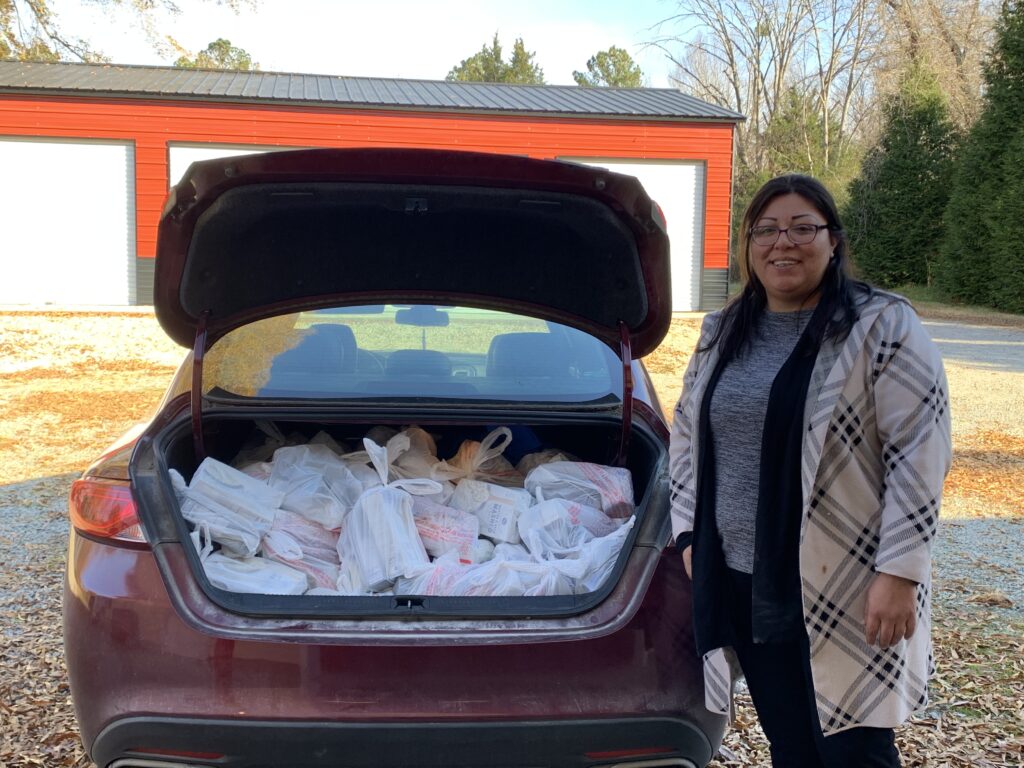
Consistency at the Heart of the Mission
Backpacks of Love’s model focuses not only on providing food, but also ensuring that no student who has been enrolled in the program goes without. Davis emphasized that reliability is the foundation of the organization’s impact.
Reaching Students with the Greatest Need
Each year, Backpacks of Love conducts a strategic review to understand where food insecurity is most severe. Davis described a deliberate process led by data, community relationships and long-term capacity.
“We are very intentional on who we commit to with the intention that we will support that student through the program until they no longer want to be a part of it,” Davis said.
While requests come in constantly, the organization prioritizes sustainable partnerships and counties where need is highest.
Participation often is strongest in elementary grades, where younger students are less likely to have alternate support systems. According to Davis, the number of eligible students goes up every year, which means the organization continues to explore opportunities for careful growth.

What Goes into the Bags
To prevent social pressure or stigma during distribution, the weekend bags are designed to be nutritious and discreet.
“We make sure that it is a privacy bag, so that it is either in a dark black or a dark gray so you cannot see the contents,” Davis said.
The board collaborated with nutritionists to determine the most effective items for each bag within their budget. When discussing how Backpacks of Love builds each weekend bag, the team focuses on cost and nutritional value.
“We were determining for X amount of dollars per bag; how do we maximize the nutrition?” Davis said. “Each bag includes core foods that are calorie rich, protein rich, fats, and then vitamins and minerals.”
Measuring Impact Through School Partners
Since student privacy limits direct feedback, Backpacks of Love relies on teachers, counselors and parents to measure impact.
“The most impactful statements we get back are from those resources that we have in school,” said Davis.
These reflections describe students who look forward to receiving their bags on Fridays, improved classroom focus and a sense of relief that basic needs will be met. According to Davis, this feedback remains their biggest way to measure impact.
Meeting Rising Needs Through Volunteers and Partners
Food costs, supply challenges and increasing demand have created new pressure points for the organization. In response, Backpacks of Love now depends on volunteers and business partnerships more than ever.
“We get out from our desk, we’re getting our steps in, there is music playing, it’s a lot of fun,” Davis said. “If we want to impact the ability to grow geographically, I see us needing to lean heavily on business partners.”
These partnerships will be essential for future growth.
How Community Members Can Help
There are three primary ways community members can make a meaningful impact: volunteering, financial contributions and tailored food drives.
“The most directly meaningful way to impact our mission is to contribute financially,” Davis said. “Our biggest cost is food.”
Still, he encourages people to begin with hands on involvement.
“Come out, just do a pack,” he said.
Food drives, especially those coordinated around the organization’s specific needs, also play a major role in the organization’s success. No matter how you volunteer, many volunteers say the experience develops deeper, long-term commitments after seeing the work firsthand.
A Commitment That Continues to Grow
As Backpacks of Love prepares for the future, its focus remains unwavering.
“We are a grassroots organization that has grown since 2011,” Davis said. “We are so committed to what we do and again, the consistency piece is so key for our impact.”
He hopes more people will learn about the mission and join in supporting it.
“Backpacks of Love is there, and we welcome any and all who want to help us achieve our mission,” said Davis.


