In 2019, Sheri Shannon and Amy Wentz heard a shocking statistic: Those who live in the Southside area of Richmond, Virginia, have up to a 20-year life expectancy gap compared to those who live in other parts of the city. This could be attributed to systemic racism, a higher concentration of poverty, exposure to environmental hazards, limited healthy food options and inadequate access to quality health care.
Shannon and Wentz were inspired to make a difference in their community and teamed up to create Southside ReLeaf, a nonprofit dedicated to environmental justice and equitable access to green spaces. It works to improve the quality of life for residents of Southside Richmond by using community-driven strategies to address and combat environmental injustices.
“The work that we do is all about making Southside Richmond greener, healthier and more connected,” said Sarah Wilkinson, communications manager for Southside ReLeaf.
Greening efforts
One of the many goals of Southside ReLeaf is increasing the city’s tree canopy cover to 60% and ensuring every resident lives within a 10-minute walk of a park or green space as outlined in the Richmond 300 Master Plan.
This mission takes root through a variety of greening initiatives, including:
- Tree planting and maintenance projects to restore shade and reduce heat in urban neighborhoods.
- Creating natural communal spaces where residents can gather, play and connect.
- Enhancing playgrounds and building community gardens in partnership with local organizations and schools.
Since its start in 2019, Southside ReLeaf has worked with over 600 volunteers, planted over 1,100 trees in public spaces and given away another 650 trees for residents to plant on private properties.
Policy and advocacy
Beyond planting trees, Southside ReLeaf is deeply engaged in advocating for equitable environmental policy. It prioritizes empowering Southside residents to advocate for the changes they want to see in their community by providing them with tools, resources and platforms to make their voices heard.
“We can do a lot with people on the ground, but we also need to be in halls of power to transform things on all ends to create lasting change,” Wilkinson said.
Among its many achievements, the advocacy arm helped pass Richmond’s Climate and Ecological Emergency Resolution, securing funding for the city’s first urban forester and an Urban Forestry Master Plan. Its grassroots efforts also protected two acres of green space at Hickory Hill Community Center, preserving a vital public space in a historically redlined neighborhood.
Education
Education is central to Southside ReLeaf’s mission to empower residents and build a greener Southside. Through its Tree Ambassador Program (TAP), it offers hands-on training that teaches community members how to plant, care for and advocate for trees.
Southside ReLeaf also brings learning directly to the community through workshops, school events and festivals that highlight environmental justice, climate resilience and urban greening. Its monthly newsletter, The Leaflet, and blog share stories and resources that inspire residents to take action for a healthier, more equitable Richmond.
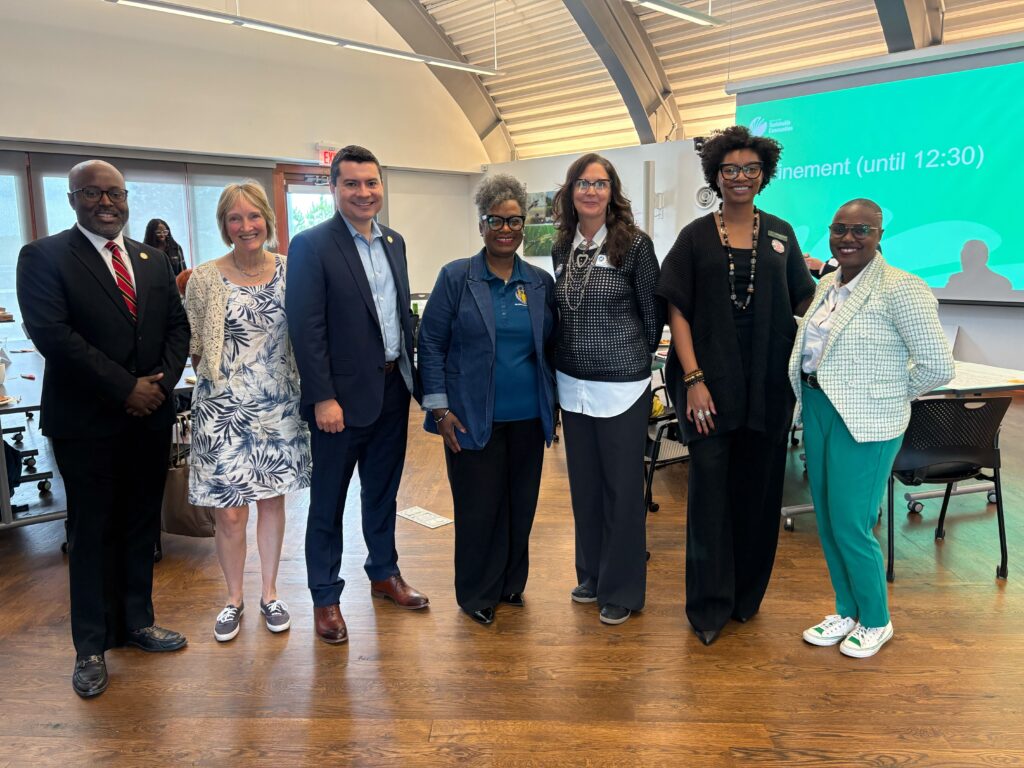
“We view every interaction with a community member as an opportunity to educate,” Wilkinson said.
With each initiative, Southside ReLeaf demonstrates that environmental justice and community well-being can grow hand in hand. Several studies show that trees and green spaces improve physical and mental health, leading to longer, happier lives. One UCLA-led study found that if park and tree coverage reached median levels, residents in Los Angeles County could collectively gain an estimated 155,000 years in life expectancy.
“It is worthwhile that the actions and decisions we take today have a long-term effect,” Shannon said.
Find more information here. You can support its mission by volunteering, donating or following Southside ReLeaf on social media.