Imagine moving through life out of focus, or in total darkness, where newspapers, magazines and print materials sit just out of reach. Thousands of Virginians experience vision loss or are visually impaired, and for many, print materials can be a barrier to access and equality.
Virginia Voice, a nonprofit organization serving the Central Virginia and Hampton Roads regions, breaks down the barrier by providing radio reading services, radio distribution and audio descriptions for those who cannot independently read print material.
“We don’t feel like being blind should preclude someone from the news,” said Tim Vogel, the program and volunteer manager at Virginia Voice.
Volunteers are the heart of Virginia Voice. More than 150 volunteers spend an hour-and-a-half to two hours each week reading and recording program material and generating access to cultural events, like performances and museums. Without the volunteers, there would be no Virginia Voice.
There are three main ways for volunteers to get involved with Virginia Voice.

Reader
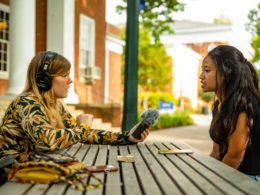
The primary role for volunteers is to provide reading services transmitted by radio. Volunteers go through a simple audition process to see if reading will be a good fit for them. If chosen, readers are assigned to a publication and asked to record a program to be broadcast at a later date. Some volunteers also are trained to do live readings of the Richmond Times-Dispatch.
Live Audio Describer
Describers allow those who are blind or visually impaired to have a memorable experience in settings where that might not typically be possible. Describers attend the practices of a performance or event and familiarize themselves with the event. Blind or visually impaired community members who attend the event are given an earpiece, and the volunteer describes the action. For example, as the curtain rises, a describer may say, “The curtain rises to reveal a forest setting with a yellow brick road that cuts across the full stage.”
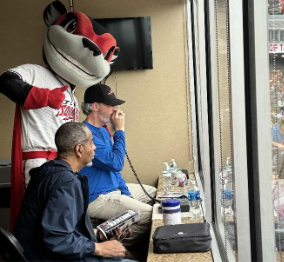
It is important to note that the describer is “describing; they are not interpreting,” according to Yvonne Mastromano, the CEO of Virginia Voice. “Just because someone is blind or has another disability, doesn’t mean they can’t interpret what’s being said or what is going on.”
The describer position is perfect for those who love theater, the arts or sports and want to experience and study behind the scenes of the production!
Radio Delivery

Radio delivery is a great volunteer option for those who enjoy meeting new people and want to meet Virginia Voice listeners in person. Delivery volunteers drop off free radios at the homes of listeners who apply for them, explain the programing schedules and answer any questions about Virginia Voice and its audio services. The radios are programmed to only broadcast Virginia Voice programs, so they are simple and easy to use. The radio unites the entire Virginia Voice community and allows blind or visually impaired people to tune in to programs without assistance.
Being blind or visually impaired can be very isolating and lonely. Virginia Voice volunteers are a light in the darkness, and their voices bring a sense of humanity and normality to those who cannot see.
“Hearing someone from their community is very comforting for [the listeners],” Vogel said. “People feel like we are keeping them company in the room.”
The volunteers at Virginia Voice are one big family who are unified by the mindset that accessibility should be available to every citizen. A volunteer can be whomever and come from wherever; the only thing that matters is their voice. Volunteers and their connections are what makes Virginia Voice so special and influential on the blind and visually impaired community.
“We don’t build ramps, but we sure do build connections,” Mastromano said.
To get involved with Virginia Voice and learn more about its work, click here.